
The Slow Rhythm of Conscious Tech
How a Psychedelic Trip Rewired My Digital Awareness

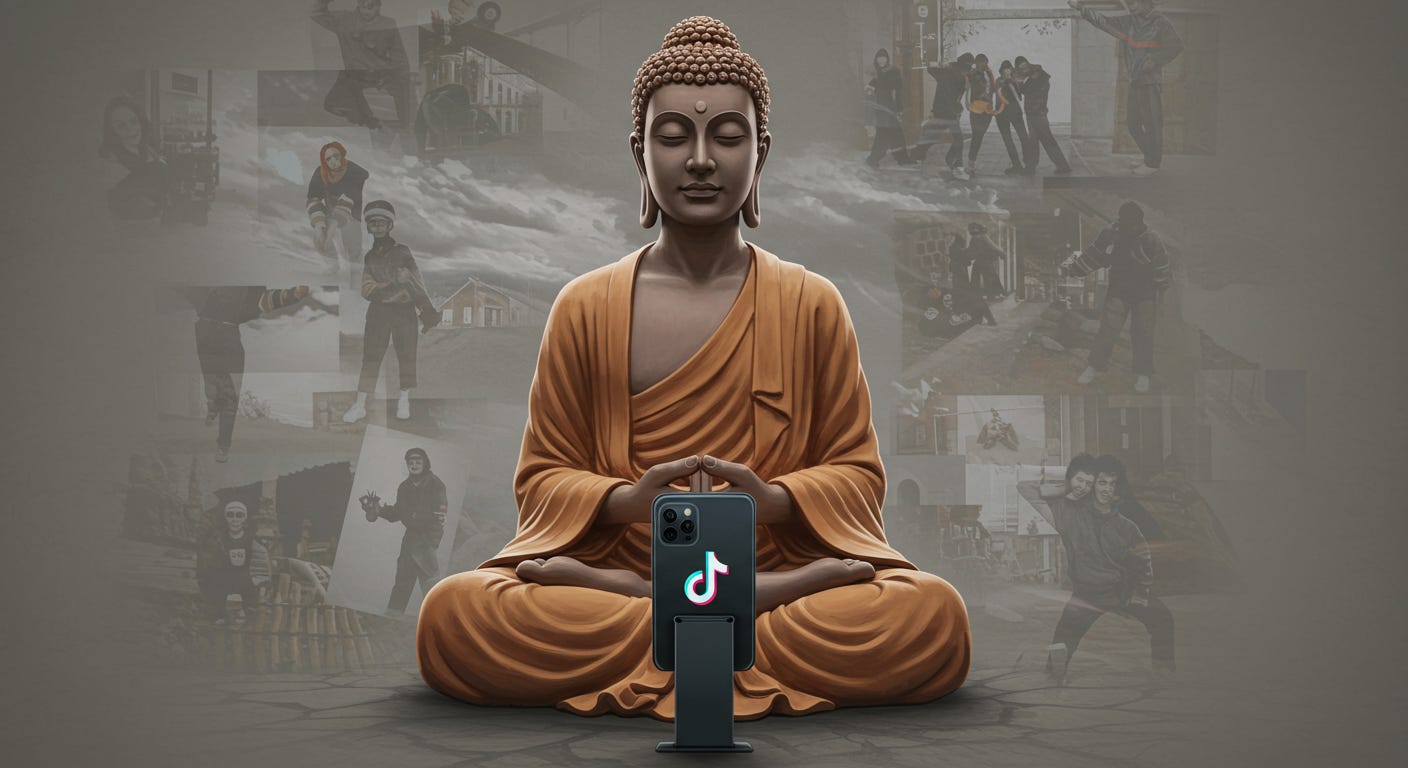
An image of artificial intelligence and the prompt is the creativity of the author.
Some trips take you out of the world—and trips that take you deeper into it.
Mine did both.
After my last experience with psilocybin, a profound shift occurred not just in my inner world but in how I interacted with the digital realm.
Seated at my laptop, I began to notice features I had long overlooked—tab groups in Chrome, integrated reading lists, and noise-canceling toggles I had never utilized.
These were not new.
They had been there for years, waiting to be discovered.
So why didn't I ever notice?
Was it aging?
Or something subtler?
As we grow older and technology continues to evolve rapidly, we tend to stick to what is familiar.
We develop emotional attachments to the tools and interfaces we grew up with. The psychological comfort zone calcifies.
Moreover, without realizing it, we become prematurely old in the digital years.
We stop learning.
We resist updates.
Not because they are bad—but because they challenge the muscle memory of our digital rituals.
What the psychedelic journey gave me was not just awareness but a rhythm.
A slow, spacious rhythm of attention.
It started with small things—like finally using Amazon Translate properly or configuring noise cancellation settings that changed how I listened, worked, and concentrated.
And then, I turned to TikTok.
Before the Trip: Dopamine on Demand
Before the trip, my TikTok experience was a haze of hijacked attention. I would smoke hydro and scroll through dance clips—mostly young women and popular pop-folk aesthetics. Sometimes, I would revisit songs from my twenties. On other nights, I would drift into darker content: sexualized storytelling, psychedelic horror, doomsday aesthetics, and highly suggestive audio designed to stimulate without satisfying.
It was an adrenaline loop.
The kind I now call "cheap adrenaline."
One night, under the influence, I saw a scene from a movie where a woman took off her clothes in front of her boss in hopes of a promotion—only to call her mother in tears minutes later.
Another scene featured a teacher passionately kissing a student—to stir jealousy among peers.
I would blast movie scores and replay imagined scenes from my own life, adding cinematic drama that never truly existed.
Overstimulated.
I was wide awake, overstimulated, and profoundly asleep at the same time.
After the Trip: Digital Consciousness & Economic Awareness
After the trip, I revisited the same videos. This time, a question arose:
"If these people are making money from going live, dancing, or creating viral clips—what system am I feeding into?"
It was no longer a passive viewing experience. I found myself dissecting the mechanics of the platform, understanding what truly holds value in this ecosystem.
What makes something valuable in this ecosystem?
Simple answer: Unless you're selling a product, course, or brand connected to your content—you're not making money.
The platform is.
You're working to keep users scrolling, not to build your sovereignty.
And even if you do monetize, it often involves addiction first and influence second.
You make people crave dopamine—before they crave you.
TikTok's brand will always eclipse your own.
Its algorithm is the real star.
My scrolling habits were no longer the same.
I found myself unable to scroll with the same passivity. When I closed the app and meditated for a few minutes, I felt a distinct wave of liberation.
I was no longer a slave to the platform, wasting hours, nights, and weeks of attention for fleeting spikes of artificial energy.
A New Way of Seeing
I recall an Egyptian influencer who gave away thousands of dollars on TikTok.
He became extremely popular but was later arrested on charges of money laundering.
His business model was unclear, and his fame, derived from the platform, was ultimately unstable and ambiguous.
In contrast, another prominent influencer concentrated on creating clear educational content, such as language learning and fundamental self-help strategies, targeted at a religious and conservative youth audience.
His rise to fame was swift, and his downfall equally rapid. He was arrested without clear charges as part of a larger crackdown on politically sensitive content.
These were not isolated cases. They were signs of a system that rewards noise, punishes nuance, and capitalizes on speed.
The Gift of Slowness
Slowness saved me. The kind of slowness you only access through deep meditation, ritual, or psychedelic insight.
The kind that allows your neurons to observe the entire process, not just the content.
Today, if a spiritual or educational video catches my eye, I research the name. I ask: What is behind this success? Who benefits from it? What is it feeding?
You do not need a psychedelic trip to do this. However, you do need a shift in tempo.
Structure.
Slowness reveals structure.
Depth exposes deception.
With this mindset, technology becomes your tool—not your trap.
You are no longer an exposed nerve ready to be exploited.
You are an active participant in the digital world—alert, conscious, and not easily deceived by enticing, superficial language.